Supporting Resources
Resource 1: Eureka Centre Website
(https://www.eurekacentreballarat.com.au)
The official Eureka Centre website serves as a comprehensive digital hub for information on the Eureka Rebellion. It provides access to digital archives, primary documents, and educational materials that help students contextualize the historical significance of the event. Teachers can utilize virtual tours and interactive media to facilitate remote learning. The site features firsthand accounts from miners and government officials, helping students analyze different perspectives. Additionally, teachers can download lesson plans, worksheets, and discussion prompts to enhance classroom engagement. The Eureka Centre website also includes a timeline of key events, allowing students to visualize the sequence leading up to the rebellion. This resource is essential for grounding classroom discussions in authentic historical evidence.
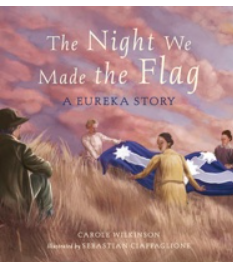
Resource 2: Book: ‘The Night We Made the Flag: A Eureka Story’ by Carole Wilkinson .
This historical fiction book brings the Eureka Rebellion to life through the eyes of a young girl who helped sew the iconic Eureka Flag. The narrative provides students with a personal connection to the historical events, fostering empathy and engagement. The book includes rich descriptions of life on the goldfields, the struggles of miners, and the significance of the flag as a symbol of resistance. Teachers can use this resource to facilitate discussions on the role of women in the rebellion, the meaning of protest, and the power of collective action. Complementary activities include guided reading, character analysis, and creative writing exercises where students imagine their own experiences in the goldfields. This resource makes history accessible and engaging for young learners.
Resource 3: Digital Archive: State Library of Victoria – Eureka Stockade Collection
(https://www.slv.vic.gov.au)
The State Library of Victoria offers an extensive digital archive of letters, diary entries, photographs, and newspaper reports related to the Eureka Rebellion. Students can explore primary sources such as handwritten appeals from miners, government decrees, and contemporary sketches of the battle. This resource supports source analysis activities where students examine bias, reliability, and differing perspectives in historical accounts. Teachers can use guided inquiry questions to help students assess the motivations of various groups involved. The collection also includes rare illustrations of the original Eureka Flag, allowing students to study its design and symbolism. By engaging with these historical artifacts, students develop essential historiographical skills, fostering deeper critical thinking and research abilities.
Resource 4: ABC Education: The Eureka Rebellion Explained
(https://education.abc.net.au)
This interactive educational platform offers engaging videos, timelines, and quizzes about the Eureka Rebellion. Students can watch historical reenactments and expert interviews to visualize key moments in the rebellion. The platform includes interactive activities where students can test their knowledge, making it an excellent tool for assessment and reinforcement. Teachers can use short documentaries to introduce the topic or as discussion starters to prompt inquiry-based learning. The resource also connects the rebellion to broader democratic principles, helping students understand its lasting impact on Australian governance. This multimedia approach ensures accessibility for students with different learning styles, making history engaging and interactive.