Learning Experience 1: Understanding the Eureka Rebellion
Description: This learning experience immerses students in the historical context of the Eureka Rebellion through inquiry-based learning and interactive activities. Students will begin by analyzing primary and secondary sources, such as miners’ petitions, government responses, and newspaper articles from the 1850s. They will investigate the causes of the rebellion, the grievances of the miners, and the role of the government, soldiers, and women in the goldfields.
To enhance understanding, students will participate in a structured historical role-play where they assume the roles of miners, government officials, or soldiers. In groups, they will prepare speeches or letters expressing their views on issues such as mining licenses, taxation, and representation. This will culminate in a class debate simulating the discussions that took place before the rebellion. This activity fosters historical empathy, critical thinking, and persuasive communication.
Next, students will create a visual timeline mapping key events leading up to the Eureka Stockade. Using images, key dates, and descriptive captions, they will piece together a chronological narrative of the rebellion’s escalation.
Additionally, students will engage in a site visit or virtual tour of the Eureka Centre to analyze artifacts such as the Eureka Flag and miners’ tools, deepening their connection to the event. They will document their observations in a reflective journal, answering prompts such as: What emotions do you think the miners felt? How do you think the government justified its actions?
Pedagogical Approaches:
- Inquiry-Based Learning: Students analyze historical sources to construct their understanding of the rebellion’s causes and effects.
- Role-Play and Dramatization: Encourages active engagement by allowing students to embody historical figures, improving retention and understanding.
- Collaborative Learning: Group discussions and debates develop students’ communication and reasoning skills.
- Multimodal Learning: The use of visual, textual, and kinesthetic activities supports diverse learning needs and engagement levels.
- Experiential Learning: The site visit or virtual tour connects students to history in a tangible way.
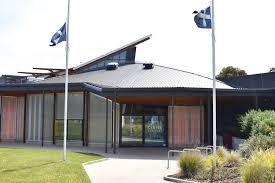
Iconic Eureka Flag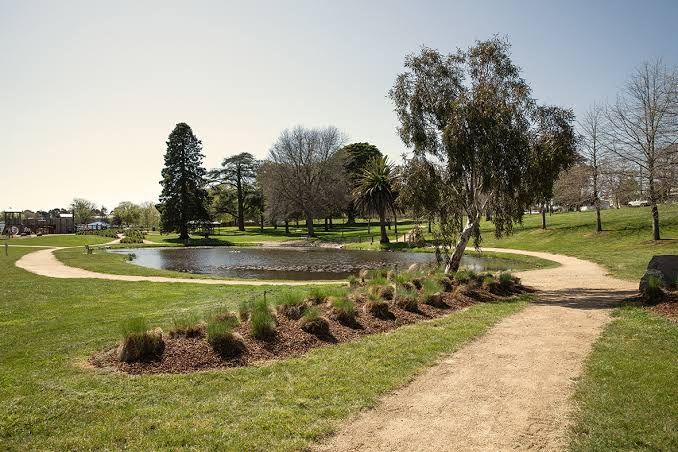
A peaceful landscape now serves as a place for reflection on the fight for democratic rights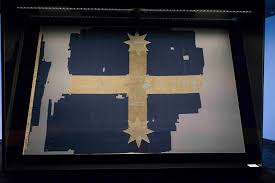
The original Eureka Flag